

Hiring a costume maker for a dance recital or competition
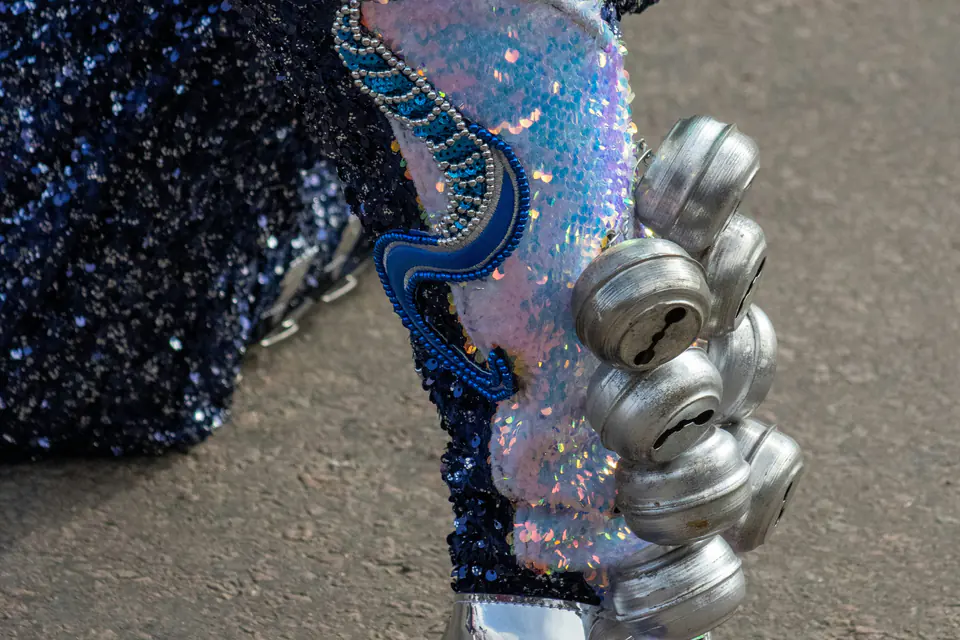
A dance costume works harder than almost any other garment. It stretches through every extension, survives sweat and quick changes, and in a group number it has to match the costume next to it under stage lights. Catalogue costumes cover a lot of recitals. When the choreography, the music or the group needs something a catalogue doesn't have, you hire a maker.
This guide is for studio owners, teachers and parents commissioning dance costumes, from one solo to a whole competition line.
Catalogue, adapt or commission?
| Option | Works well for | Watch out for |
|---|---|---|
| Catalogue costume as-is | Recital numbers with a common theme | Sizes run small, colours limited to the range |
| Catalogue base plus a maker's additions | Adding sleeves, skirts, trim or appliqué to a stock leotard | The base must arrive in time for the maker to work on it |
| Full commission | Competition solos, concept pieces, unusual colours, adult or hard-to-fit dancers | Lead time, and the brief has to be clear |
The middle option is underrated. A maker can turn a plain stock leotard or biketard into something specific to the piece. That usually costs less than drafting a costume from scratch, and the stretch base is already tested.
Fabric: stretch is the starting point
Most dance costumes are built on stretch knits, usually nylon or polyester with spandex. Say how the costume has to move, and the maker can choose the fabric and construction:
- Range of movement. Leaps, floor work, lifts and partnering all pull fabric in different directions. Name the moves that stress it most.
- Two-way or four-way stretch. Bodices that go through extensions need stretch in both directions. Skirts and overlays may not.
- Lined or unlined. Light colours and mesh panels often need lining or a nude base layer under stage lighting.
- Embellishment on stretch. Stones, sequins and appliqué limit stretch where they sit. A good maker places them away from the areas that stretch most.
- Washing. Ask for care notes. Our FAQ covers general fabric care, and the maker should confirm how the embellished parts must be cleaned.
Quick changes
Recitals and competitions often put one dancer in several numbers. Tell the maker:
- How many seconds the dancer has between numbers, and what they change from and to.
- Whether a parent, a dresser or the dancer does the change.
- Whether pieces can be layered: a skirt or jacket over a base that stays on for both numbers.
The maker can swap hooks for zips or magnets, add pull tabs and build tear-away layers. They can only plan this if they know about the change.
Matching a group
In a group number, the costumes have to look identical from the audience, even when the dancers are very different sizes. Put these in the brief:
- One fabric lot for the whole group. Dye lots can vary, so ask the maker to cut every costume from the same batch and buy a little extra for repairs.
- Trim placement measured from fixed points, such as the waist seam or the neckline, so it lines up across sizes.
- Child and adult patterns. A costume scaled straight up from a child's pattern can fit an adult badly. Dance-costume manufacturer The Line Up offers child patterning on group orders of ten or more garments in the same style and colour, and notes that this takes extra production time. Ask your maker how they grade across ages.
- A spare. For a big line, one unassigned spare in a mid size covers a late cast change or a costume damaged at the dress rehearsal.
The measurements a dance costumer needs
Our price guide has a full measuring table for any costume. For dance, one measurement matters more than the rest: girth, also called torso girth.
The Line Up's sizing guide calls it "one of the most important measurements for determining leotard, unitard and biketard size". Start the tape at the centre of the shoulder, where a leotard strap sits. Run it down the front of the torso, between the legs and up the back to the same point. Keep it close to the body but not tight.
Send girth with:
- Bust or chest, waist and hips
- Height
- Inseam, for unitards and trousers
- Shoulder to waist, and waist to floor for long skirts
A few rules from dance-costume sizing guides make group measurements far more consistent:
- Measure over a leotard, or over the underlayers the dancer will wear on stage.
- Keep the tape snug but don't pull it tight. Don't add room either. The maker adds the ease.
- Have the same person measure the whole group. The Line Up recommends this, and it removes most of the variation in a cast list.
- Between sizes, size up. The Line Up's advice is to size up, because taking a costume in is easier than letting it out.
For children, measure as close to the start of the build as the schedule allows, and tell the maker their ages. Leaving extra seam allowance or adding adjustable straps gives room for growth before the competition season ends.
Timing
Work back from the first event where the costume is worn, which is often a competition weeks before the recital. Allow time for:
- Brief, quotes and choosing a maker
- Fabric ordering, especially for an exact colour
- Build, with a fitting or a sample for the group
- Fixes after the fitting
- Shipping, if the maker isn't local
Then add a buffer before the dress rehearsal, so a late fix doesn't land on show day.
Putting the brief together
One post can cover a whole studio's needs if each costume or group has its own block:
Number / routine:
Dancers: (count, ages, solo or group)
Style and reference images:
Movement notes: (lifts, floor work, partnering)
Quick change: (seconds, from what to what)
Fabric and colour: (or "maker to advise")
Embellishment:
Measurements: (attach sheet, girth included)
Needed by: (first event date)
Budget for this number:
Costumers on custom costume and prop makers on The Spool List quote against that written brief. Itemised quotes per number make it easy to trim one routine if the budget tightens.
FAQ
Can a maker add to a costume we already bought? Yes. Alterations and additions usually cost less than a new build. Send the garment with photos of it worn and a description of what should change.
Can one maker do the whole studio? Often. Give sizes for every dancer and say which costumes are identical. For a very large show, splitting the numbers between two makers can shorten the schedule.
What if a dancer grows before competition season? Tell the maker early. Adjustable straps, extra seam allowance and separate pieces handle small changes. A full remeasure is better for a long season.
Do we need to supply the rhinestones? Say in the brief. Some makers supply and apply them, and others apply stones you send. Either way, list the number and size you expect.
Post your recital or competition costume list free on The Spool List and compare bids from independent dance costumers.