

Hire a costume maker for a play: school & community theatre
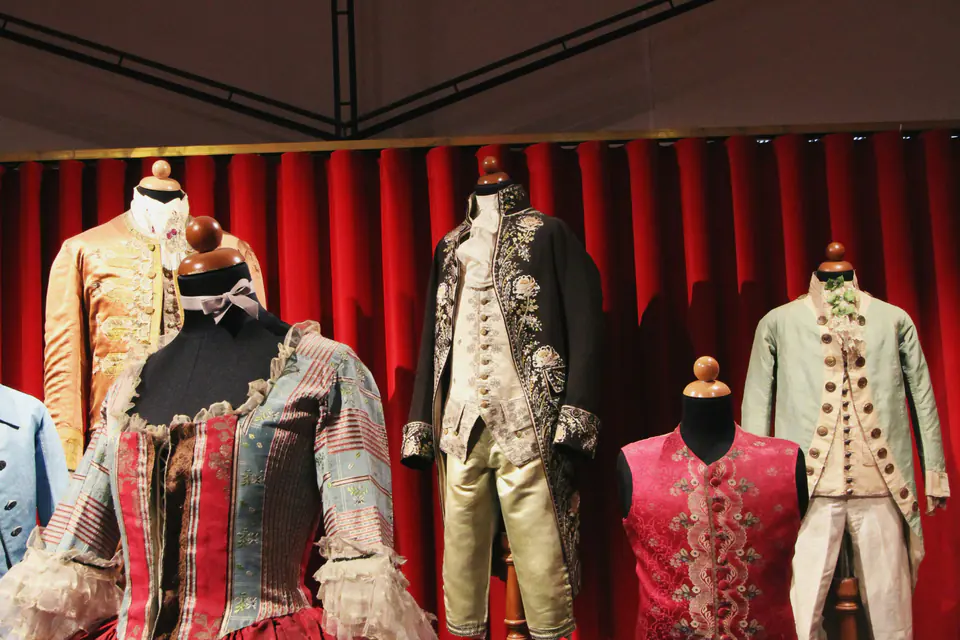
Most advice for school and community theatre is about avoiding a costume maker altogether: borrow from other groups, raid the cast's wardrobes, hit the post-Halloween sales. That's good advice, and it covers most of a show. But nearly every production has a few pieces you can't borrow or buy. A talking animal. A queen's gown that has to survive twelve quick changes. Six matching soldiers in children's sizes. That's when you hire a costume maker for the play.
Rent, borrow, buy or commission?
Sort your costume list into four piles before you contact anyone.
| Option | Best for | Limits |
|---|---|---|
| Borrow / cast's own clothes | Contemporary and everyday looks | Fit and style vary |
| Buy and alter | Simple period or uniform looks | Alteration time; sizes may not exist |
| Rent | Big period shows, full-show packages | Fixed rental window; usually no cutting, gluing, painting or dyeing |
| Commission | Non-human characters, hero pieces, matching sets, anything rentals can't do | Lead time; needs a clear brief |
Rental rules matter. The TDF Costume Collection, for example, lets renters make only minor alterations: no glue, cutting, paint, dye or stage blood. If your director wants a costume ripped, splattered or transformed on stage, it probably needs to be bought or made.
What to commission
Commissioning works best for a short list:
- Signature pieces the audience remembers: the gown, the creature, the villain's coat
- Non-human characters: animals, puppets-as-costumes, robots, monsters
- Matching sets: chorus or ensemble pieces that have to look identical
- Effects costumes: tear-away, reveal or transformation pieces
- Props worn on the body: armor, crowns, wings, masks
Everything else can usually come from the other piles.
Brief a maker with a costume plot
A costume plot is a simple table of who wears what, in which scene. Makers work from it. Give them one row per piece:
Character / actor:
Scene(s) worn:
Description + reference images:
Quick change? (time available, from what to what):
Measurements: (attach sheet)
Must survive: (dance, fight, stage blood, crawling)
Washable? (how many performances)
Budget for this piece:
Needed by: (first dress rehearsal date)
A few things theatre makers will ask about:
Quick changes. Say how many seconds the actor has and what they change from. Makers can swap buttons for hook-and-loop, magnets or zips, and build pieces in layers.
Measurements for every actor, taken the same way, ideally by one person. For school casts, take them as close to the build start as you can. Kids grow over a rehearsal period.
Understudies and double casting. If two actors share a costume, say so. The maker can build in adjustable fastenings or extra seam allowance.
Durability and laundry. A costume worn every night of a run, under hot lights, needs to wash or air out. Say how many performances and rehearsals.
Venue rules. Some venues have rules about materials near open flame or pyrotechnics. Check with your venue and pass any rules on to the maker.
Timing
Work backwards from the first dress rehearsal, not opening night. You'll want time for at least one fitting and a round of fixes. If the maker is remote, add shipping both ways for fittings, or ask for a fitting-free approach (a toile or mock-up the actor tries on locally).
Paying for it
Many school and community groups need a written quote before anyone can spend money. Ask makers for an itemised quote per piece. That makes it easy to trim the list if the budget tightens.
On The Spool List you post the costume list free, makers bid per job,. The payment is protected until you confirm the costumes arrived as agreed, and disputes are handled by the platform. There's no buyer fee on top of the maker's price.
FAQ
Can we hire a maker for just one or two costumes? Yes. Small commissions are common. Commissioning your one hard piece and sourcing the rest elsewhere is often the cheapest route.
Do we need a costume designer as well as a maker? Not always. Many school and community shows have the director or a volunteer act as designer, then hire makers for specific builds. Bring references and the maker will handle construction.
What if the actor's measurements change? Tell the maker early. Building with extra seam allowance or adjustable fastenings makes late changes easier.
Can the costumes be reused for future shows? Ask for that in the brief. Neutral bases with detachable trim and adjustable sizing are easier to reuse.
Post your show's costume list free on The Spool List and get bids from independent costume makers.