

Historical costume commissions: briefing a maker on period
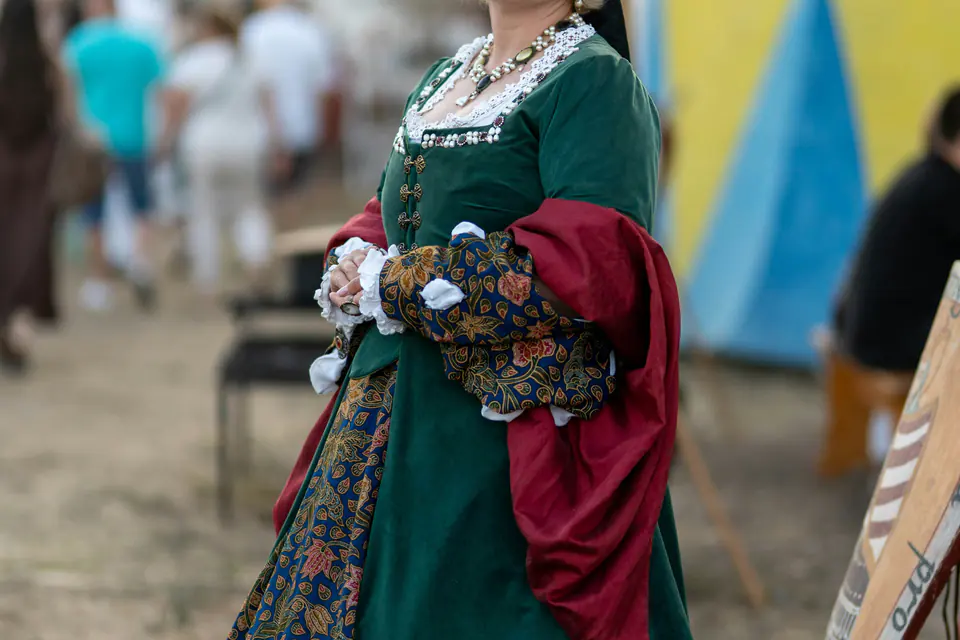
Short answer: decide how accurate the costume has to be before you ask for quotes. "Looks right from the back row", "passes at a reenactment" and "matches a museum original" are three different jobs, with different fabrics, construction and hours. Tell the maker which one you want, show them your references, and the quotes will line up.
Three levels of accuracy
| Level | What it means | Typical choices |
|---|---|---|
| Stage | Reads as the period from a distance and under lights | Modern fabrics that look right, machine sewing, hidden zips or Velcro for quick changes |
| Reenactment | Holds up close, at events where others know the period | Natural fibres, period-correct silhouette and layers, visible seams hand-finished |
| Museum or living history | Matches surviving originals in cut, fabric and construction | Hand sewing throughout, period fastenings, researched fabric weaves and colours |
Each step up adds research, more expensive fabric and many more hours. Most theatre and event work sits at the stage level. Say so, and you won't be quoted for hand-set eyelets you'll never see.
What to send
References. Portraits, fashion plates, surviving garments in museum collections, and stills from productions you like. Say which details matter and which are optional.
Date and place. "1860s" is not enough. "Early 1860s, middle-class English day dress" is a brief.
The full outfit, layer by layer. Many period looks rely on what's underneath: shifts, stays or corsets, petticoats, crinolines, waistcoats. Say whether you need the underlayers made, or already own them. The shape of the top layer depends on them.
Measurements over the right underwear. For corseted periods, the maker needs measurements taken over the corset, not over everyday clothes. Ask the maker which measurements they need and how to take them.
How it will be worn. For stage: how long, under what lights, with quick changes? For events: outdoors, in rain, for a whole weekend? For display: on a mannequin only?
Fabric preferences. Wool, linen, silk and cotton behave differently and cost differently. If you want natural fibres only, say so in the first message.
What makes the price move
- Accuracy level, more than anything else.
- Underlayers. A corset or stays is a project in itself.
- Hand sewing. Visible hand finishing takes far longer than machine work.
- Fabric. Silk and fine wool cost more than cotton blends.
- Fittings. Fitted bodices and tailored coats need at least one fitting. Remote fittings need accurate measurements and clear photos.
- Deadline. Period work is slow. Rushing it costs.
Our costume price page explains the cost drivers in more detail.
Questions to ask a maker
- Which periods have you made before? Can I see photos of them being worn?
- Will you make the underlayers, or work over mine?
- How many fittings, and can they be done remotely?
- What fabric would you use at my accuracy level, and why?
- How should the costume be cleaned and stored?
When the brief is ready, post it free on The Spool List and compare bids. You can also browse custom costume and prop makers on The Spool List.
FAQ
Can a stage costume be upgraded for reenactment later? Sometimes, but it often costs more than building it right. Choose the level you'll need.
Do I need a corset for a corseted period? For the right silhouette, usually yes. Ask the maker whether the dress is cut to be worn over one.
Can one maker do a whole historical cast? Some can. Ask about capacity and timing before you commit, and read our guide to ordering costumes for a whole cast.